When Heat Stops Being Weather: Europe’s Latest Heatwave and the Quiet Shape of Dystopia
20 June 2026 — Reelika Lootus

Extreme heat is no longer background weather. Across Europe, rising temperatures are testing the systems people once trusted to stay invisible. — AI-generated
Somewhere around 42°C, weather stops feeling like weather. It starts feeling like a condition. Like something imposed rather than forecast.
Europe's heatwaves have been arriving earlier, lasting longer, and carrying an increasingly familiar quality — not shock, but dread. The kind of dread that comes from recognising a pattern. This summer's heat across southern and central Europe didn't surprise anyone. That's what made it worse.
When I write dystopian fiction, one of the central questions I return to is: what does collapse actually look like from the inside? The dramatic answer is rubble and sirens. The honest answer is more administrative. It looks like updated guidelines. Heat action plans. Revised temperature thresholds for what qualifies as dangerous. People quietly adjusting what they consider normal.
That quiet adjustment is where I find the real unease.
The Normalisation Problem
There's a psychological phenomenon sometimes called "shifting baseline syndrome" — the idea that each generation accepts the world it inherits as the standard, without fully accounting for what's been lost. Fish populations. Insect density. The number of days per year below 30°C in places that weren't built for it.
For writers, this is terrifying in a specific way. The dystopia doesn't announce itself. It sediments. And by the time anyone thinks to document the before, the before is already half-forgotten.
In Fast Moon, I built a world shaped by exactly this kind of accumulated change — not one catastrophic event, but a long series of decisions, adaptations, and quiet capitulations that left people living in something unrecognisable, without quite knowing how they got there. The architecture of that world is less science fiction than extrapolation. The Fast Moon series is, in many ways, a sustained examination of that process.
Infrastructure as Character
During the recent heatwave, rail lines across several European countries were slowed or suspended. Roads buckled. Power grids strained. Hospitals reported heat-related admissions in numbers that made headlines for two days and then stopped making headlines, because the headlines had to move on.
What struck me wasn't the failure of infrastructure — it was the revelation that infrastructure had always been designed for a world that no longer exists. That the systems we rely on were built around assumptions that are being quietly invalidated, year by year.
In Flood, infrastructure is almost a character in itself. What holds. What doesn't. What was built to last and what was built to last long enough. There's something deeply psychological about watching systems strain — it surfaces questions about who designed them, who they were designed for, and who gets left outside when they fail.
The Language of Emergency
One of the quieter horrors of living through a slow-moving crisis is what happens to language. "Unprecedented" becomes precedented. "Record-breaking" stops breaking anything in the public imagination. "Emergency" becomes a bureaucratic category rather than a felt state.
When I think about the Fast Moon world, the most important detail isn't the speculative technology or the altered geography — it's the way people talk. Or don't talk. The things that go without saying, because saying them would require acknowledging what they mean.
That linguistic compression is something I observe in real coverage of heatwaves too. The reporting becomes procedural. Drink water. Stay indoors. Check on elderly neighbours. Good advice. But advice that, repeated often enough, begins to function as a container — something that holds the emergency at a manageable distance, stops it from being fully felt.
Who Adapts and Who Doesn't
Climate-related events are never evenly distributed. The people most exposed to extreme heat are rarely the people with the most options for avoiding it. This is not a new observation. But it bears repeating, because the gap between those who adapt and those who cannot is precisely where the social texture of a future — or a fiction — lives.
The dystopian imagination has sometimes been accused of privileging dramatic scenarios over structural ones. Apocalypse over inequality. But the more interesting — and more unsettling — territory is the latter. The world where some people have cool rooms and others don't. Where some cities retrofit and others don't have the budget. Where the heat simply costs more if you're already paying more for everything else.
That's not a thought experiment. That's a current news story. The fiction is just willing to follow it further.
What Writing About This Requires
I don't write cli-fi in the traditional sense — environmental collapse as backdrop, survival as plot. I'm more interested in the psychological and political interior of a changed world. The way people rationalise, defer, and eventually forget to be afraid of things they've grown used to.
Writing about heat — real or fictional — requires a kind of restraint. The temptation is always to escalate, to make the horror legible through scale. But scale numbs. A single person in a top-floor flat without air conditioning, watching a thermometer, waiting for evening — that's where the weight is. That's the sentence that lands.
The largest crises are always lived at the smallest scale. That's true in fiction. And it's true in what's happening right now, in cities across Europe, on days when 42°C stops feeling like weather and starts feeling like something else entirely.
For readers drawn to futures that feel too close to dismiss, the Fast Moon series follows a world where heat is no longer weather, survival is no longer private, and adaptation has become another form of control.
If this kind of worldbuilding, research, and psychological darkness interests you, you can follow my writing updates here.
Was this interesting?
Share this post
Get reader updates from the Fast Moon universe.
Early chapters, world files, and release news.
Join the Inner Circle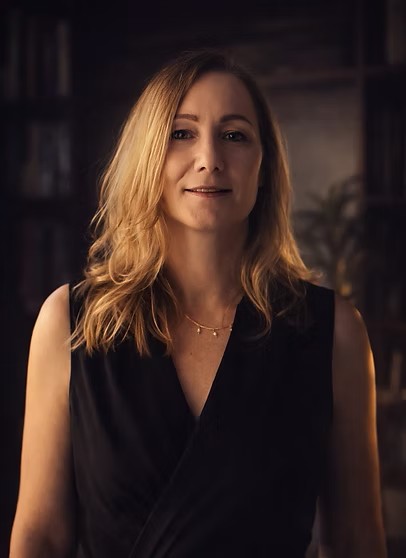
Estonian author of dark dystopian thrillers and psychological suspense. Author of the Fast Moon series and the award-winning psychological thriller The Years They Took.
More about the author →